
Showing posts with label Housing. Show all posts
Showing posts with label Housing. Show all posts
Wednesday, July 15, 2009
This Is What A Housing Bubble Looks Like
Click here if the video isn't visible
The Market Rubbernecker is affiliated with Aspera Financial, LLC, a registered investment advisor. Please read the disclaimer on the home page of the Market Rubbernecker site.


Tuesday, October 28, 2008
Housing And The Candidates
"Homeowners are the innocent bystanders in a drive-by shooting by Wall Street and Washington." John McCain
"What we need is a floor in the housing market, a, a stop to the decline in housing values." Barack Obama 
One of these two men will be our next President. Neither of these two men have shown any understanding of basic economic principles or economic reality. There seems to be a collective re-writing of history underway that passes nearly all of the blame for the mortgage debacle on to Wall Street and Washington and absolves the home buyer from any guilt. That may make it easier for Congress to pass its ill-conceived bailouts, but it doesn't square with the facts.
Let's start with McCain's quote. Homeowners are the innocent bystanders? I can only hope that this comment is driven more by political expediency and pandering than actual belief. This type of comment makes me wish he'd focus less on the economy and more on Palin's wardrobe and make-up.
The fact, however, is that many homeowners over the last few years knowingly took a gamble on housing. Some gambled that interest rates would always remain low. Some gambled that they'd always be able to refinance their mortgage at a low teaser rate. Some gambled that they would be able to sell their home to a greater fool at the time of their choosing. Some gambled that their eccentric rich old Aunt Eunice would kick off and leave them a mint. Some gambled that they would get a raise that would offset any mortgage payment increase. Some gambled that they would be able to flip their negative cash flow investment properties for a nice profit to another investor who was even less concerned with cash flow.
Yes, there was some fraud that occurred. Those folks/firms should be prosecuted to the full extent of the law. However, when financial institutions agree to lend money to a homeowner with some combination of low credit score, low earnings, low down payment, and little savings, that's not fraud. It's just bad business. The bank was foolish for making such a loan, but that doesn't mean that the homeowner who willingly accepted that loan should bear no responsibility. Do you think these same homeowners would be complaining about their mortgages today if the real estate market and economy hadn't soured? Of course not. It seems to only be a problem for them because their gamble didn't pay off.
If you sign a document, you're acknowledging that you understand and agree to its terms. If you don't understand the terms, you have no business signing the document. Any homeowner could have hired their own lawyer for a few hundred dollars to explain the terms. Anyone could have Googled "mortgage" to help get up to speed. Instead, people were willing to spend more time researching the purchase of a new plasma TV than the details of their mortgage terms.
What about Obama's quote about needing a floor in the housing market? This ridiculous statement shows Obama's complete lack of awareness of the disastrous history of price fixing. This reminds me of Pakistan's stock exchange. The Pakistanis grew tired of falling stock prices in their country this summer so they instituted a floor under stocks on August 28th. Until further notice, stock prices would be allowed to fluctuate within a 5% range, but they wouldn't be allowed to fall any further.
What has happened since? Volume has dried up and the market has barely budged. Who in their right mind would want to step in and buy with such a lack of transparency in this environment? If price fixing and floors really worked why don't we put a floor under incomes at $1 million? We could all be rich! In addition, let's pass some legislation mandating that everyone is entitled to a minimum level of attractiveness. We'll just have the "government" pay for all of the "necessary" implants, botox, and liposuctions.
Trying to put a floor under housing will lead to buyers stepping away from the market, which is the last thing we need. There is only one real ultimate solution to the housing crisis and that's for new supply to fall and for home prices to decrease to levels at which buyers (new homeowners and investors) will be able and willing to absorb the existing excess inventory. Artificially inflating prices by putting a floor under them would have the adverse effect of decreasing price transparency and discouraging buyers from making offers.
There is also the issue of fairness. Most U.S. taxpayers either rent a home or can still comfortably handle their mortgage. Why should this majority of Americans bear the cost of bailing out those who gambled and lost? It's truly absurd from the perspective of renters (future homeowners) as any government intervention that serves to artificially support home prices doubly bites this group. They incur their share of the cost of the bailout while artificially inflated home prices keep them from fully benefiting from the housing price correction.
Talk is now building for another round of bailouts, this time focused on directly helping homeowners who are under water. McCain has proposed buying mortgages from banks at face value and then replacing it with a new 30-year fixed government mortgage at an interest rate of just over 5%. He basically wants to reward the financial institutions who made these ridiculous mortgages by paying them full value. Then he'll give the homeowner a new smaller mortgage that's in-line with the current value of the house. What happens to the difference between the size of the old and new mortgage? Well, that loss will be borne by you and I, the U.S. taxpayer. You have to love the absurdity of the plan. Reward the banks for making bad loans and then turn around and reward the homeowner (who likely gambled) with a lower mortgage at an interest rate better than a new borrower with an 800 FICO score and 40% down would receive!
We don't need the government to get involved with loan negotiations. Banks will negotiate with homeowners when it makes economic sense to them. If the present value of a new mortgage at new terms exceeds the amount the bank projects that it would receive from foreclosing, a bank is going to take a hard look at negotiating with the homeowner. Otherwise, the property should be foreclosed upon. The homeowner will get out from under the mortgage and become a renter again with a rental expense that is likely much below their previous house payment. The homeowner may have to endure the stigma of foreclosure for some time, but with so many people facing foreclosure, I'm not sure much of a stigma will be attached. The bank will take the hit it deserves for making a loan it should have rejected. The property will be put back on the market and will eventually be sold to a new homeowner who will be able to meet the more stringent mortgage qualification requirements demanded by banks. No government (taxpayer) money needs to be wasted in this process.
Neither Obama nor McCain nor Congress will or can solve the mortgage "problem." The problem was the bubble. The correction is the solution, not the problem. I recently read that 6% of the U.S. workforce are lawyers but 45% of the members of Congress are lawyers (another 45% couldn't get into law school). The real problem is that it's impossible for a room full of lawyers not to meddle.
Congress, along with either Obama or McCain, will continue to pass ever-larger bailouts and stimulus packages in an effort to encourage increased lending in an economy that is imploding because of too much debt. Somehow, they (and many economists) don't see the irony of trying to fix the problem of too much debt by encouraging increased lending.
Disclosure: The Rubbernecker is short bailouts, pandering, and botox, and he's longing for the end to this election season.
The Market Rubbernecker is affiliated with Aspera Financial, LLC, a registered investment advisor. Please read the disclaimer on the home page of the Market Rubbernecker site.
Friday, October 17, 2008
Housing: Good News! The Cliff-Diving Continues!
The latest housing data was released today, and not surprisingly, the big bad wolf once again blew over our pile of straw. The Census Bureau reported that housing starts fell to a seasonally adjusted annual pace of 817,000, which is 6% lower than last month and 31% lower than last September. 

Building permit data was equally impressive with total permits falling 8% from the prior month and 38% from the prior year. Both are at near 50-year lows and are certain to break that record in the months ahead.
Plenty of the reports out today on this news are decrying the horrific state of housing, and plenty of pundits are further lengthening their estimate of how long and severe the housing downturn will last. I think we may have finally reached the point where even the hardiest housing bull has had to admit defeat, give up his Realtor license, hand the keys to his Miami condo back to the bank, and start planning his run for Congress.
I have to admit that I don't know how long the downturn will last. There are so many variables at play with housing, the economy, and the financial markets that any guess would be simply that -- a guess. What I can say is that I smile every time another "bad" housing report is issued.
The fact is that this is the type of data we will need to see for some time before housing bottoms. A massive amount of housing was built during the bubble, and that surplus needs to be eliminated before prices level off. We need to see fewer housing units built and increased absorption/destruction of the existing supply. It's really that simple. We should welcome this type of data.
What we should not welcome is any effort on the part of our legislators to interfere with the market adjustment currently underway. Any effort to support housing prices will only serve to muddy price transparency and prolong the length of the downturn. One key factor needed to help absorb the excess supply is demand from new first-time buyers. These folks are already "disadvantaged" by the tighter lending standards of the banks and grimmer job prospects. Any program/bailout/Ponzi scheme that keeps home prices above their natural market-clearing level will only further disadvantage and discourage these individuals and families from buying a home. Lower home prices are actually a good thing for a while.
I've remained out of housing stocks during this down cycle, and I still see no reason to jump in. Just as with the financials, there will be impressive short-term pops, but trying to time these is just gambling. The fundamentals of the homebuilders still look lousy, and I expect to see more failures before all is said and done. Even then, I don't expect home building to come roaring back. After bottoming, these shares are likely to remain rather unexciting as home prices once again tether themselves to incomes (unexciting) and rents (also unexciting). At least we'll all be a little less piggish, and we'll be rebuilding with "brick", rather than "straw."
Disclosure: This little Rubbernecker went to the market, and this little Rubbernecker had none.
The Market Rubbernecker is affiliated with Aspera Financial, LLC, a registered investment advisor. Please read the disclaimer on the home page of the Market Rubbernecker site.
Tuesday, May 27, 2008
New Home Sales - Revising Their Way Higher
Yet another housing data point to digest. This time it’s the monthly New Home Sales report from the Census Bureau. It looks like all of the headlines concerning the release are touting a 3.3% rise in new home sales from last month (to an annualized rate of 526,000), and a number of articles are once again implying that, again, this may again be yet the latest sign again that the end of the real estate downturn again is here – once again.
Most of the articles I've seen either ignore or glance over the fact that last month's figure was revised down from an annualized rate of 526,000 to 509,000. So, if last month's figure hadn't been revised lower, this month's figure would have been dead flat with last month. Depending on your level of optimism or pessimism, that's either 0% growth or a 0% decline, but it's definitely less than 3.3% growth. It is, however, a nice easy way to manufacture growth. Personally, I'm thinking of revising my April intelligence lower by 10% to boost my self-esteem this month.
To be fair, the report itself isn't completely terrible. The months-of-supply figure (how long it would take to sell the new homes currently for sale given the current rate of sales) fell modestly from an absurdly high 11.1 months to a ridiculously elevated 10.6 months. That's the right direction, but only time will tell if it's the beginning of a trend. It does illustrate what needs to happen to get back to equilibrium -- builders need to build fewer houses relative to the level of sales. You can track all of the home price data, builder optimism surveys, permit numbers, and sales info you like, but residential housing isn’t going to bottom out until the months-of-supply (inventory) figures for both new and existing homes get a lot closer to normal levels.
As an aside, those who are clamoring for a return to normalcy (which I think includes everyone) should be embracing the fall in housing prices. The lower prices will make housing once again affordable to more people and thus lead to the higher demand that the housing market needs. Moves by Congress to offer "aid" and to "support" the housing market at best will forestall the correction in prices that must ultimately occur to get back to equilibrium.
Despite having strong contrarian sympathies, I currently remain modestly short the real estate sector -- primarily through exposure to two ETFs (long SRS and short XHB). I suspect the real estate shakeout will take longer to occur than many think. Furthermore, it's very unlikely that we'll experience another real estate boom for quite some time.
The home builder industry is likely to emerge a bit smaller and more consolidated with rather unspectacular growth and margin opportunities. Even once they bottom, I imagine that there will be more fertile pastures elsewhere - probably in fertile pastures (I like agriculture.). That’s not to say that there may not be some intriguing deep value plays at some point, but at the current time, my strategy with the housing sector is fairly straightforward -- short substantial advances, cover on the declines, and some day finish staining my deck.
Tuesday, April 29, 2008
Britain's Coming Real Estate Bust
The real estate troubles we've been experiencing here in the U.S. aren't at all unique to us. Many a European flat, chateau, and villa experienced a similar or greater bubble during this decade, and they're now starting to retrench as well. Home prices are falling and mortgages are more difficult to come by as many banks are (rationally) requiring higher credit standards and larger down payments, if they're willing to lend at all.
Britain seems to be just a bit behind us on this credit/housing unwind. Discretionary spending is likely to at least moderate as credit availability suffers and inflation continues to rise. We should expect to see a slowing in European real economic growth. The most interesting question just may be how our recession and a slowing in Europe would affect Asia. I'll address this in another post.
The Europeans do have one big advantage over us. If things get really bad for them they can take advantage of the weak dollar, move to the States, and buy a mansion in Cleveland for what it costs them to fill an SUV back home. Of course, they'd have have the distasteful choice of working as either as debt collector or a political strategist since these are about the only jobs available here.
From the TimesOnline:
House prices fell for the second consecutive month in March, according to official figures released today.The Land Registry figures, which show that the average cost of a home in England and Wales dropped by 0.4 per cent in March to stand at £184,798, will add to growing fears that the UK is about to suffer a significant slump in the housing market.
The Land Registry also revealed that housing market transactions averaged 81,926 a month between October 2007 and January 2008, which was down 25.5 per cent year-on-year. Sales volumes were also weakening more markedly at the end of this period, as they were down 39.2 per cent year-on-year in January at 53,221.
Howard Archer, chief UK economist at Global Insight said: "We now expect house prices to fall by 7 per cent in 2008 and 9 per cent in 2009. Furthermore, the longer the credit crunch goes on and the deeper and longer the UK economic slowdown is, the greater the danger will be that an even sharper housing market correction will occur.
"Current rapidly deteriorating sentiment over the housing market also heightens the risk that house prices could fall more sharply over the next couple of years. Consequently, it is very possible that a drop of more than 20 per cent in house prices could occur over the next couple of years.
The official figures came as a leading estate agent suggested that house prices could fall by as much as 25 per cent if the credit crunch persists, with the market declining by 10 per cent this year and by a further 15 percentage points in 2009.
From the BBC:
The slowdown in the UK mortgage market continued in March, according to figures from the Bank of England.It said the number of new mortgages approved for house purchases in March fell to a record low of 64,000, down from 72,000 the previous month.
This was the lowest level since the bank started collecting the data in April 2003, and was down 44% on the figure for the same month in 2007.
However, credit card and other lending increased in March from February.
A global credit crunch has caused lenders to put up prices on mortgages and withdraw mortgage deals, especially for those unable to put down a significant deposit, in recent months.
The credit crunch, when banks are less willing to lend to each other and consumers, was caused by problems in the US housing market, which saw a surge in mortgage defaults and a drop in property values.
In the UK, property prices have also started to dip during 2008, according to various housing surveys.
"The news that mortgage approvals dropped to a record low of 64,000 is hardly surprising given that lenders have been aggressively scaling back on the provision of finance to homebuyers," said Simon Rubinsohn, chief economist at the Royal Institution of Chartered Surveyors (Rics).
The Bank also reported a drop in loans approved for remortgaging, down 11,000 in March from the previous month at 98,000, and for other purposes such as buy-to-let, down 6,000 at 57,000.
Thursday, April 24, 2008
New Home Sales Stats = U - G - L - Y


 New home sales came in at a seasonably adjusted pace of 526,000, continuing their fall from an all time peak of 1,389,000 in July of 2005. The median sale price for new homes fell to $227,600 in March, continuing its decline from a record level of $262,600 just last year in March of 2007. That makes for a 13% decline - so far. At the current sales rate, the 468,000 new homes currently for sale works out to an 11-month inventory. The all-time high of 11.6 months was reached back in April 1980.
The bad news? We're clearly not seeing any sign of a bottom in the new home market. Worst of all, despite dramatically falling sales and prices, inventory continues to move higher. For this overhang to be worked down, we'll need to see fewer new builds and lower prices.
The good news? It's still early, but sales and prices are headed in the right direction to ultimately clean out the inventory glut. Lower housing starts will ultimately help on the supply side and lower prices will help with demand. One of the wild cards with the existing home sales inventory data is how many properties are not being listed by homeowners who would like to move but aren't even bothering to list their property due to the poor housing market.
This housing problem will be with us longer than most expect.
Tuesday, April 22, 2008
Housing Bubble? What Housing Bubble?
To think, Congress and our states are busy trying to find a way to support real estate prices. Until and unless the prices of glorified outhouses are allowed to fall to market-clearing prices, the housing downturn will continue.
From the Dr. Housing Bubble website:
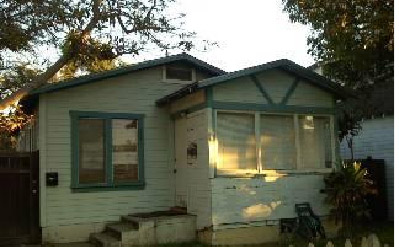
Price: $749,000
Square Feet: 635
Details: 2 bedroom / 1 bath
Median Rent for Similar Unit: $2,500
Thursday, April 17, 2008
Time to Foreclose on Hillary's Housing Plan
Since this post is somewhat politically-related, I need to stress the following upfront:
- I have always been registered as an independent.
- I find both parties equally nauseating, ignorant, and polluted (but not in a scary Unabomber kind of way).
- I don't believe any of the three remaining Presidential candidates have a clue when it comes to economic policy.
- I tend to mumble a bit and spasm when I watch the debates.
With that out of the way I wanted to touch on Hillary's comment about the housing situation during last night's debate. She said,
I want to see us actually tackle the housing crisis, something I've been talking about for over a year. If I had been president a year ago, I believe we would have begun to avoid some of the worst of the mortgage and credit crisis, because we would have started much earlier than we have -- in fact, I don't think we've really done very much at all yet -- in dealing with a way of freezing home foreclosures, of freezing interest rates, getting money into communities to be able to withstand the problems that are caused by foreclosures.To say that you would have prevented the largest housing and credit bubble we've ever seen from collapsing is the height of arrogance. She doesn't say that she would have prevented the bubble itself from happening. This thing was already uber-inflated a year ago when she claims to have started talking about it. So, though she wouldn't/couldn't have prevented the bubble she believes she could have prevented its deflation. I suppose she believes she could have prevented the tech bubble from bursting and Dutch tulips from collapsing.
Trying to prevent a bubble from popping is a terrible idea. Bubbles are not healthy for the economy in the long-term as they lead to gross mis-allocations of capital. In the case of housing, far more money was thrown at housing and mortgages than warranted by economic fundamentals. A bubble is not a state of equilibrium - that's what makes it a bubble. The quicker the bubble is popped, the quicker we return to sound economics. Trying to prop up a bubble only introduces further moral hazard and prolongs the ultimate damage.
Looking at her specific proposals, she first mentions freezing foreclosures. Keeping people in houses they can't afford serves no one. Many of these people were never qualified to be homeowners in the first place. Furthermore, the ability to foreclose is one of the reasons lenders are willing to make loans in the first place. Freezing foreclosures certainly isn't going to make more money available for mortgages. Think about what you would do if you were lending your money and all of a sudden the rules are changed so that the government, at its whim, can prevent foreclosures. Would you be as willing to lend? If you were still willing to lend, wouldn't you want to charge a higher interest rate? Wouldn't you severely tighten your lending standards so that you were only lending to those with the best credit and finances? Wouldn't you require a larger down payment? Hillary (and all politicians) love to talk about making homeownership affordable for more people, but this policy would do exactly the opposite.
How about freezing interest rates? Same thing. Imagine you're a lender and all of a sudden the government can come in and freeze the rates you charge people. You've logically been charging riskier people higher interest rates, but now the government steps in and doesn't allow those rates to adjust up (think ARMs). You might be less willing to make ARM loans. Either way, you've just had a big new risk introduced. Might you want to increase the interest rates you charge to compensate for this new risk?
Next, she mentions "getting money into communities". That's fairly vague, but it certainly entails spending tax-payer money to support a bubble. The government needs to get out of the way and let housing prices fall to market clearing levels. Housing prices in many communities never should have climbed as high as they did - virtually everyone agrees with this. So why must the politicians try so hard to keep them from falling? (that's a rhetorical question)
Wednesday, April 16, 2008
Housing Starts fall 11.9% in March

According to today's Census Bureau release:
Privately-owned housing starts in March were at a seasonally adjusted annual rate of 947,000. This is 11.9 percent (±11.6%) below the revised February estimate of 1,075,000 and is 36.5 percent (±5.2%) below the revised March 2007 rate of 1,491,000.The headline is pretty ugly. 11.9% fall in March. The chart above is even uglier. The total housing starts series goes back to 1959. The highest monthly figure is 1,837,000 starts in January 2006. That number has declined 63% to the current run rate of 680,000 annual housing starts.
Single-family housing starts in March were at a rate of 680,000; this is 5.7 percent (±11.1%)* below the February figure of 721,000. The March rate for units in buildings with five units or more was 247,000.
The lowest figure since 1959 was 523,000 and that occurred in October of 1981 as Volcker was busy jacking up interest rates well into the teens to combat inflation. We're not all that far from a new record low.
This is actually good news. We have a huge oversupply of housing currently, and the only way to stabilize the housing market is to lower supply and/or increase demand. Lower housing starts helps to lower supply. With demand still weakening this isn't going to be fixed overnight, but the housing market is adjusting as it should. I expect this to take longer to correct than most and continue to be net short this sector.
Youngstown, Ohio is doing its part to speed the correction. Link to article.
Subscribe to:
Posts (Atom)
